9  Stem Cells, Tissue Engineering and Regenerative Medicine

Reprogramming, the subject of the previous chapter, rejuvenates the cells a body already has. Regenerative medicine asks a different question: when the reserve itself is spent, can we restock it — or build the tissue anew, or even grow a replacement organ in another species? This chapter surveys the repair shop, and finds that almost every route in it leads back to the same problem the book keeps meeting: the loss of cellular identity.

A young tissue repairs itself because it keeps, in reserve, a population of cells that have not yet decided what to be — stem and progenitor cells, held in a poised, undifferentiated state, ready to divide and replace what is lost. Ageing is, among other things, the slow failure of that reserve: fewer cells, less competent, in a niche that no longer instructs them correctly. The therapies gathered here all attack that failure, but from different distances — by replacing the cells, by supplying what they secrete, by rebuilding the tissue around them, or by borrowing another animal’s embryo to grow the organ outright.

Chapter 2 listed stem-cell exhaustion among the integrative hallmarks — the downstream collapses in which the primary molecular damage finally registers as a loss of function for the whole organism (López-Otín et al., 2023). Chapter 8 took up the most radical response to that collapse, the controlled re-expression of identity factors to wind a cell’s age backwards; the dosing problem at its heart, and the ex vivo organ reprogramming it enables, were treated in Section 8.2, and this chapter does not revisit them. What it covers instead are the regenerative routes that do not depend on Yamanaka factors: cell therapy, the therapeutic use of the secretome, tissue engineering, and interspecies chimerism. They share a premise with reprogramming but not a mechanism — and, as we shall see, they share its central difficulty too, because a replacement cell is only as good as the identity it can hold and the niche that holds it there.

9.1 Stem-cell ageing: why the reserve declines

9.1.1 The exhaustion hallmark and what ageing means for a stem cell

Stem cells are not exempt from ageing; they are partially shielded from some of its mechanisms and acutely exposed to others. A 2025 synthesis by Rando, Brunet and Goodell — between them the architects of the muscle, neural and haematopoietic stem-cell fields — distils the aged stem-cell phenotype into five cardinal features, and shows that the same features recur, with tissue-specific emphasis, across compartments as different as blood, muscle and brain (Rando et al., 2025). The shared signature is not simply that there are fewer stem cells, though often there are; it is that the surviving cells differentiate poorly, lose the crisp quiescence that protects them, accumulate molecular noise, and drift in identity — the very property Chapter 1 took as the essence of ageing (Section 1.5).

This drift expresses itself differently in each compartment, which is why no single number captures it. In the haematopoietic system the classic change is myeloid skewing: the aged blood-forming hierarchy tilts away from the lymphoid lineages that defend against new pathogens and towards the myeloid output that fuels inflammation. In muscle, the satellite-cell pool loses the responsiveness that lets it rebuild fibres after injury. In the brain, neural stem cells fall quiescent and neurogenesis dwindles. What unites them is a movement from a well-specified, low-variability state towards a leaky, high-variability one — the cellular echo of the epigenetic drift traced in Chapter 3.

NoteKey concept — stem-cell exhaustion is a verdict, not a mechanism

Stem-cell exhaustion names an outcome — the age-related decline in the number and, more importantly, the function of a tissue’s stem cells — not a cause. It sits among the integrative hallmarks precisely because it is where the primary damage of the other hallmarks is cashed out: genomic instability, telomere attrition, epigenetic drift and a failing niche all converge on it (López-Otín et al., 2023; Rando et al., 2025). The practical consequence is that “exhaustion” can be reached by many roads, so a therapy that refills the pool without addressing why it emptied is treating the symptom. This is the lens through which to read everything that follows: the question is never only can we add cells? but will the added cells stay young, and will the tissue let them work?

9.1.2 Intrinsic drivers: proliferative stress, mitochondria and the inflammatory turn

Why does the reserve decay? Part of the answer is internal to the cell. A 2026 dissection of human haematopoiesis from youth to old age found that primitive stem-cell numbers were largely preserved, yet the aged cells differentiated poorly, showed chromatin and cell-cycle dysregulation, and — most tellingly — tolerated the stress of activation badly, acquiring DNA damage and senescence-like features when forced to proliferate (Lettera et al., 2026). The same study performed the decisive control in reverse: imposing proliferative stress on young human stem cells reproduced the hallmarks of ageing. The implication is that much of stem-cell ageing is not a clock ticking in the cell but a tally of demands met — every episode of division and repair leaves a residue, and the residue is what we call age. It is the cellular counterpart of the information-loss argument of Chapter 3, where the act of repair was itself the agent of decay (Yang et al., 2023).

Beneath that sits a metabolic and inflammatory engine. A 2026 review marshals the evidence that mitochondrial dysfunction is not merely one hallmark among the stem cell’s troubles but an upstream driver: as mitochondrial DNA mutations accumulate and quality control falters, damaged organelles spill their contents into the cytosol, where the cell reads mitochondrial DNA as if it were viral and fires the cGAS–STING and NF-κB pathways (Bautista & López-Cortés, 2026). The result is a chronic, sterile inflammation — inflammageing — that both reflects and accelerates stem-cell decline, compounded by the depletion of NAD⁺ that disables the sirtuins on which mitochondrial resilience depends. Muscle illustrates how finely this can now be resolved: a 2026 account of the transcriptomic study of satellite-cell ageing shows the field moving from blunt population averages, which obscured the rare and the variable, to single-cell and spatial maps that reveal aged stem-cell pools changing in state composition rather than ageing uniformly (Kim et al., 2026). The aged reserve, in short, is not a faded copy of the young one; it is a different mixture, weighted towards the dysfunctional.

9.1.3 The niche and mechanical ageing

The cell is only half the story. A stem cell lives in a niche — a local microenvironment of supporting cells, signalling molecules and physical matrix that instructs it when to rest, divide or differentiate — and the niche ages too. One of the most striking recent developments is the recognition that part of this ageing is mechanical: the matrix stiffens, and the cell feels it. In the hippocampus, tissue stiffness rises substantially with age and tracks the fall in neurogenesis; engineering hydrogels to match the stiffness of young, middle-aged and old brain tissue showed that stiffness alone could drive a neural stem cell towards an aged phenotype, acting through the mechanosensitive channel Piezo1 — and that disrupting Piezo1 rejuvenated old cells, in a mechanism conserved from rodents to primates (Guo et al., 2026).

The same logic reaches inside the cell. In aged haematopoietic stem cells, raised tension at the nuclear envelope activates the small GTPase RhoA; lowering RhoA activity relaxes that tension, restores youthful levels of the repressive heterochromatin mark H3K9me2, quietens reactivated retrotransposons and, through the identity factor Klf4, improves the regenerative capacity and lineage balance of old cells (Mejía-Ramírez et al., 2026). Mechanics, in other words, is transduced into the very epigenetic and identity machinery that the rest of this book treats as the substrate of ageing — a stiff niche becomes a drifted epigenome. The phenomenon is concrete enough that ageing can now be read off a cell’s mechanics: an integrin-based “mechano-probe” detects the fall in adhesion forces that marks an aged mesenchymal stem cell, distinguishing old from young cells in a mixed pool (Liu et al., 2026).

This is where the chapter joins the book’s organising thread. The loss of cellular identity that Chapter 1 named, and that Lu and colleagues anatomised as a mesenchymal drift — the slide of specialised cells towards a generic, fibroblast-like state — has, in the ageing niche, both a cause and an amplifier (Lu et al., 2025). A stiffening, drifting matrix pushes its resident stem cells towards the same loss of identity, which further degrades the matrix, in a loop that links the mechanical to the epigenetic and the epithelial-to-mesenchymal transitions of fibrosis. To rejuvenate the reserve, then, may require rejuvenating its soil.

ImportantAnalogy — the orchard, not the fruit bowl

It is tempting to picture the stem-cell reserve as a fruit bowl that empties with age and need only be refilled. The orchard is the better image. An orchard’s yield depends not only on the number of trees but on their vigour and on the soil they stand in; a tired orchard can be replanted, but saplings dropped into exhausted, compacted ground will fail as the old trees did. Ageing depletes the trees (the cells), blunts their fruiting (their competence) and hardens the soil (the niche). This is why the cell therapies of the next section, which replant, must reckon with the tissue-engineering and niche problems of the sections after — and why the most interesting recent results are those that send in trees bred to thrive in poor soil, rather than merely sending in more trees.

9.2 Cell therapy: replacing and rejuvenating the reserve

9.2.1 Approaches and hurdles

If the reserve is the problem, the most direct response is to supply new cells. Cell therapy spans a spectrum: transplanting healthy stem or progenitor cells to repopulate a failing compartment, differentiating pluripotent cells into a needed cell type, or coaxing the resident pool back to competence with metabolic, epigenetic, pharmacological or niche-directed interventions (Cui et al., 2025). The haematopoietic system, where bone-marrow transplantation has been clinical practice for half a century, is both the proof that the strategy can work and the source of its hardest lessons. Three hurdles recur across every compartment: engraftment — transplanted cells must home to the right place and stay; immunogenicity — allogeneic cells risk rejection, autologous cells must be sourced and expanded; and tumorigenicity — pluripotent and highly proliferative cells carry the standing risk of forming a teratoma or seeding a cancer. To these the manufacturing problem is now added: a therapy that works in a dish must be made reproducibly, at scale, under good-manufacturing-practice conditions, before it can reach a patient (Cui et al., 2025; Sun et al., 2026).

9.2.2 Senescence-resistant progenitors: a proof of concept in primates

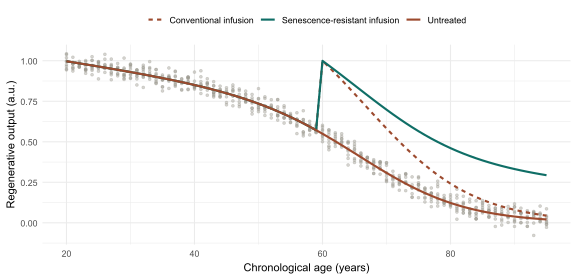
The most consequential recent result in the field confronts the orchard problem head-on, by sending in cells engineered not to age. In a 44-week trial, a large Chinese–US consortium delivered human mesenchymal progenitor cells, genetically fortified against senescence, intravenously to aged cynomolgus macaques, and recorded a systemic reduction in the markers of ageing — less cellular senescence, less chronic inflammation, less tissue degeneration — across multiple organs, with improvements in brain architecture and cognition and a partial reversal of reproductive decline, and no detected tumorigenicity or immunogenicity (Lei et al., 2025; Siddique et al., 2025). Methylation and transcriptomic ageing clocks (Chapter 3) registered a fall in biological age, most pronounced in the reproductive system, skin, lung, muscle and hippocampus. The result matters not only for its scale — a primate, not a mouse — but for its provenance: the senior authorship overlaps almost exactly with the group that defined mesenchymal drift as a signature of ageing (Lu et al., 2025), so the same laboratory that named the disease here tests a cell-based answer to it. Figure 9.1 develops the underlying logic in a simple simulation.

A second 2026 study shows the same problem attacked pharmacologically rather than genetically: the adipokine asprosin, whose levels fall with age, turns out to be a mesenchymal-stem-cell rejuvenation factor, antagonising senescence through a metabolic-to-epigenetic relay (a glycolysis–lactate–histone-lactylation axis) and, when restored to aged cells, improving their capacity to repair an infarcted heart (Zhang et al., 2026). The two studies frame the strategic choice now facing cell therapy: engineer cells to resist senescence before transplant, or rejuvenate the resident pool in place. Both work in animals; neither is a clinic.

Show the simulation code
library(ggplot2)
set.seed(11)

ages <- 20:95

# Two falling quantities (arbitrary units, normalised to ~1 at age 20)
reserve    <- function(a) pmax(0, 1 - 0.006 * (a - 20))          # slow decline in pool size
competence <- function(a) 1 - 1 / (1 + exp(-0.12 * (a - 68)))    # sigmoidal rise of senescent fraction
output_base <- reserve(ages) * competence(ages)

# Infusion at age 60. Conventional cells senesce on the host's schedule;
# senescence-resistant cells add a competent compartment that decays slowly.
t0 <- 60
boost <- 0.45
conv  <- ifelse(ages >= t0, boost * competence(ages) / competence(t0), 0)   # follows host senescence
srcs  <- ifelse(ages >= t0, boost * exp(-(ages - t0) / 70), 0)              # slow, senescence-resistant decay

lines <- rbind(
  data.frame(regimen = "Untreated",                   age = ages, output = output_base),
  data.frame(regimen = "Conventional infusion",       age = ages, output = output_base + conv),
  data.frame(regimen = "Senescence-resistant infusion",age = ages, output = output_base + srcs)
)

# Cross-sectional cohort around the untreated mean
n <- 9
pts <- data.frame(
  age    = rep(ages, each = n),
  output = rep(output_base, each = n) + rnorm(length(ages) * n, 0, 0.035)
)

ggplot() +
  geom_point(data = pts, aes(age, output), colour = "#9A968C", alpha = 0.40, size = 1) +
  geom_line(data = lines, aes(age, output, colour = regimen, linetype = regimen), linewidth = 1) +
  scale_colour_manual(values = c("Untreated" = "#9C4A2E",
                                 "Conventional infusion" = "#9C4A2E",
                                 "Senescence-resistant infusion" = "#0F6E66")) +
  scale_linetype_manual(values = c("Untreated" = "solid",
                                   "Conventional infusion" = "22",
                                   "Senescence-resistant infusion" = "solid")) +
  labs(x = "Chronological age (years)", y = "Regenerative output (a.u.)",
       colour = NULL, linetype = NULL) +
  theme_minimal(base_size = 11) + theme(legend.position = "top")
Figure 9.1: Why ‘senescence-resistant’ cells matter, simulated. Regenerative output is modelled as the product of two falling quantities: the size of the stem-cell reserve (a slow, near-linear decline) and its competence (the fraction of cells not yet senescent, which collapses sigmoidally as senescence accumulates). Grey points are simulated individuals in a cross-sectional cohort; the rust line is the untreated trajectory. A one-off infusion at age 60 of conventional progenitors (dashed) lifts output briefly, but the new cells senesce on the same schedule as the host’s and the benefit fades. An equal infusion of senescence-resistant cells (teal) adds a competent compartment that decays far more slowly, bending the whole trajectory upward — the simulated counterpart of the primate result of Lei et al. (2025). The figure makes the chapter’s recurring point visible: in regenerative medicine, the durability of the cells matters more than their number.

The macaque study did not invent immortal cells; it tilted a regulatory balance. The progenitors were fortified by enhancing the activity of FOXO3, a forkhead transcription factor that sits at a hub of stress-resistance programmes — antioxidant defence, DNA repair, proteostasis and autophagy — and whose variants are among the most reproducibly associated with human longevity (Lei et al., 2025). Strengthening FOXO3 raises a cell’s threshold for entering senescence under the stresses of transplantation and an aged host, so the infused population stays functional for longer rather than joining the senescent burden it was meant to relieve. Two further details matter for interpretation. First, much of the systemic benefit was attributed not to the cells’ direct engraftment but to their exosomes — a paracrine effect that motivates §9.2.3. Second, the safety read-out (no tumorigenicity over the trial) is reassuring precisely because enhancing a stress-resistance factor is the kind of manipulation one might fear could also protect nascent tumour cells; the result is encouraging but, at 44 weeks in a handful of animals, not yet decisive (Siddique et al., 2025).

CautionCaveat — a primate trial is not a clinic

The temptation, with a result as striking as systemic rejuvenation in a monkey, is to read it as a near-term therapy. Several gaps counsel restraint. The cohorts are small and the follow-up short relative to a primate lifespan, so durability and late harms — including cancer, the standing risk of any pro-survival, pro-proliferative intervention — remain open. Intravenous mesenchymal cells are largely trapped in the lungs on first pass and clear quickly, which is part of why the secretome may carry the effect; that, in turn, complicates the leap to a defined, dosable product. And “biological age fell on the clocks” inherits every limitation of the clocks themselves (Section 3.3): a lowered methylation age is a hypothesis about rejuvenation, not a demonstration of restored lifespan. The honest summary is that Lei et al. (2025) moves senescence-resistant cell therapy from plausible to demonstrated in principle in a primate — a real and rare advance, and still several hard steps short of people.

9.2.3 Beyond whole cells: the secretome and extracellular vesicles

A recurring surprise of cell therapy is that the cells often need not stay, or even arrive, to help. Much of the benefit of transplanted mesenchymal cells is paracrine](../glossary.qmd#gloss-paracrine){.gloss}: it is carried by what they secrete — growth factors, immunomodulatory proteins and, above all, extracellular vesicles, the membrane-bound nanocarriers (exosomes among them) that ferry proteins, lipids and regulatory RNAs between cells. The exosomes credited with much of the primate rejuvenation above are the headline case (Lei et al., 2025), but the principle is general, and it has given rise to an emerging cell-free therapeutics: use the messengers, not the cells.

The evidence is now concrete. Exosomes from young umbilical-cord mesenchymal stem cells, applied to senescent bone-marrow stem cells from aged donors, lowered the senescence markers p16, p21 and p53 and the inflammatory cytokines of the SASP, restored proliferation and differentiation, and improved bone repair in aged rats — acting by reactivating autophagy through the PI3K–AKT–mTOR pathway (H. Li et al., 2025). Across cell types, stem-cell vesicles can modulate senescence programmes, damp inflammation and even cross the blood–brain barrier to act on the ageing brain, which is why they are increasingly framed as candidate anti-ageing agents in their own right (Kumar et al., 2025).

NoteKey concept — the paracrine principle

The paracrine hypothesis holds that a transplanted stem cell’s chief therapeutic act is not to become the missing tissue but to signal to the tissue already there — to instruct resident cells to survive, divide, suppress inflammation and rebuild. If that is right, the active principle is the secretome, and the cell is merely its factory. The reframing has large practical consequences. A cell-free product made of vesicles is, in principle, more controllable, more storable and less risky than a living graft: no engraftment to achieve, no rejection to suppress, no tumour to seed. The cost is fidelity — a vesicle preparation is a complex, hard-to-standardise mixture whose composition shifts with the source cell’s age and state, so the central challenge migrates from cell biology to manufacturing and quality control. Cell-free does not mean problem-free; it relocates the problem.

9.3 Tissue engineering and organ regeneration

Replacing cells restocks a tissue; it does not rebuild one whose architecture has failed. Where a whole structure is lost — a length of oesophagus, a damaged cornea, a cirrhotic liver — regenerative medicine turns to tissue engineering: the combination of cells, a supporting scaffold and instructive signals into a functional construct. Three strands of recent work mark how far, and how unevenly, the field has advanced.

9.3.1 Scaffolds and decellularised matrices: the engineered oesophagus

The most demanding scaffold is the one the body built itself. Decellularisation strips a donor organ of its cells with detergents, leaving behind the extracellular-matrix “ghost” — the native architecture, vasculature template and mechanical cues intact — to be repopulated with the recipient’s own cells. The approach reached a notable milestone in 2026, when a Great Ormond Street–led team engineered a 2.5-centimetre oesophageal segment by microinjecting a child-sized minipig’s own myogenic precursors and fibroblasts into a decellularised porcine scaffold, maturing it in a bioreactor, and grafting it with the support of a biodegradable stent and a vascularising pleural wrap (Durkin et al., 2026). The conduits integrated: the animals fed orally and grew, native architecture progressively reformed, and — the hardest measure for a muscular organ — secondary peristalsis appeared by six months, all without immunosuppression, since the cells were autologous. As the accompanying commentary observed, the achievement lies in the combination of regenerative, conditioning and surgical strategies rather than any one of them; muscle regeneration and stent-dependence had defeated earlier attempts (Bailey & Que, 2026).

Why autologous changes everything. Because the oesophageal graft was rebuilt with the recipient’s own cells on a decellularised matrix, there were no foreign cell-surface antigens to reject, and no immunosuppression was needed (Durkin et al., 2026). That single fact — avoidable rejection — is the prize that drives much of regenerative medicine and, as §9.4 shows, the chief argument for growing organs from a patient’s own cells rather than transplanting another individual’s, or another species’.

9.3.2 Organoids: models that may become building blocks

A second strand grows tissue from the bottom up. Organoids — self-organising, three-dimensional miniatures of an organ, grown from stem cells — began as models, and remain indispensable as such: they reconstruct in a dish enough of an organ’s structure to study its development, its diseases and its responses to drugs. The methodological frontier is now throughput and resolution. A 2026 protocol bioprints organoids in defined, thin geometries and reads their growth and drug responses by label-free interferometry at single-organoid resolution, resolving the heterogeneity that bulk assays average away — the kind of platform that turns organoids from artisanal cultures into screening instruments (Wang et al., 2026). The longer ambition, still mostly ahead of the field, is to use organoids not only to model tissue but to supply it, as transplantable building blocks for repair.

9.3.3 Cell-based organ support: the liver paradigm

The third strand sits between cell therapy and transplantation. The liver, with its prodigious native regenerative capacity, is the natural proving ground for hepatocyte-based therapy: rather than replace the whole organ, infuse functional liver cells to correct a metabolic defect for the long term, or to support a failing liver temporarily across a crisis (Sun et al., 2026). The limiting factors are familiar — a shortage of functional cells and inefficient engraftment — and the proposed solutions draw the chapter’s threads together: stem-cell-derived hepatocytes as a scalable source, better engraftment and immune compatibility, and, tellingly, an explicit place for the approach alongside gene therapy and xenotransplantation rather than in competition with them (Sun et al., 2026). Regeneration, on this view, is not one technology but a toolkit, assembled per organ and per patient.

9.4 Growing organs in other species: interspecies chimeras

The most radical answer to the organ shortage is also the oldest dream of the field: to grow a human-compatible organ inside an animal. The leading strategy is blastocyst complementation — and it is worth being precise about why it is, in principle, so elegant, and why it remains, in practice, so hard.

9.4.1 Blastocyst complementation: principle and proof

The idea exploits an empty niche. If a host embryo is genetically engineered so that it cannot form a particular organ — the developmental slot for, say, a pancreas is vacant — and donor pluripotent stem cells are injected into that embryo, the donor cells, facing no competition, fill the vacancy and build the missing organ from their own lineage. Grow the embryo to term and the resulting animal is a chimera: its body is the host’s, but the targeted organ is donor-derived. A 2025 review tallies the progress — nineteen studies generating solid organs by complementation, spanning liver, lung, kidney, pancreas, heart, thyroid, thymus and parathyroids — and marks the sobering boundary: of the seven that attempted it across species, all but one were rat-in-mouse, and only a single study used human donor cells in a pig (Bigliardi et al., 2025).

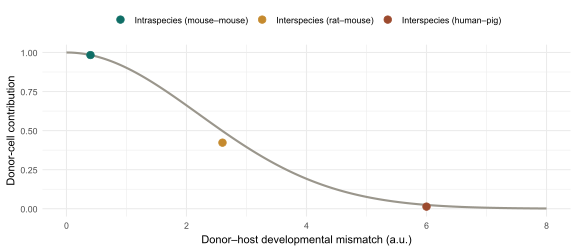
The barrier the review keeps returning to is developmental mismatch. When donor and host cells differ in their developmental tempo and their molecular dialogue, the donor contribution falls. A 2024 study makes the limit vivid: injecting rat pluripotent cells into mouse embryos engineered (via Mesp1/2 deficiency) to lack cardiac mesoderm did generate a heart built largely of rat cells — a genuine interspecies, donor-derived organ — but its function stalled at an embryonic stage, never maturing into a working adult heart (Yuri et al., 2024). Figure 9.2 models why the gap between species so sharply suppresses contribution.

Show the simulation code
library(ggplot2)

mismatch <- seq(0, 8, by = 0.05)          # developmental/temporal/signalling offset (a.u.)
sigma    <- 2.2                            # tolerance width of complementation
contribution <- function(d, penalty) exp(-(d^2) / (2 * sigma^2)) * penalty

curve_df <- data.frame(mismatch = mismatch,
                       contribution = contribution(mismatch, penalty = 1))

pairs <- data.frame(
  pair    = c("Intraspecies (mouse–mouse)", "Interspecies (rat–mouse)", "Interspecies (human–pig)"),
  d       = c(0.4, 2.6, 6.0),
  penalty = c(1.00, 0.85, 0.55)            # foreign-milieu penalty (e.g. temperature)
)
pairs$contribution <- contribution(pairs$d, pairs$penalty)
pairs$pair <- factor(pairs$pair, levels = pairs$pair)

ggplot() +
  geom_line(data = curve_df, aes(mismatch, contribution), colour = "#9A968C", linewidth = 1) +
  geom_point(data = pairs, aes(d, contribution, colour = pair), size = 3.2) +
  scale_colour_manual(values = c("Intraspecies (mouse–mouse)" = "#0F6E66",
                                 "Interspecies (rat–mouse)"    = "#C58A2E",
                                 "Interspecies (human–pig)"    = "#9C4A2E")) +
  labs(x = "Donor–host developmental mismatch (a.u.)",
       y = "Donor-cell contribution", colour = NULL) +
  ylim(0, 1) +
  theme_minimal(base_size = 11) + theme(legend.position = "top")
Figure 9.2: The species barrier, simulated. Donor-cell contribution to a complemented organ is modelled as a Gaussian function of developmental mismatch — the offset in developmental tempo and signalling ‘language’ between donor and host — scaled by an additional physiological penalty (for an interspecies pair, the stress of an unfamiliar body temperature and milieu). An intraspecies pair (teal) sits near zero mismatch and achieves high contribution; a rat–mouse pair (amber) is offset but still within reach; a human–pig pair (rust) is pushed far enough out, and penalised enough by the foreign environment, that contribution collapses. The curve is illustrative, not quantitative, but it captures the qualitative lesson of Bigliardi et al. (2025) and Yuri et al. (2024): complementation is exquisitely sensitive to how closely donor and host are matched.

The procedure has four moves. First, engineer the host embryo to disable a master regulator of the target organ, leaving a developmental vacancy (the Mesp1/2 deletion that empties the cardiac slot is one example). Second, derive donor pluripotent stem cells — embryonic or induced — that are competent to colonise an early embryo. Third, inject the donor cells into the host blastocyst and transfer it to a surrogate; with no host cells able to build the organ, the donor cells occupy the niche and differentiate into it. Fourth, allow development to proceed and assess how much of the organ — and only that organ — is donor-derived. Each step has a failure mode that the species barrier worsens: donor cells may be out-competed in non-target tissues, may apoptose in a foreign embryo, may proliferate out of step with the host, or may build an organ that matures incompletely, as in the embryonic-stage rat heart of Yuri et al. (2024). The elegance of the idea is that selection does the targeting for you; its fragility is that everything depends on donor and host speaking the same developmental language.

9.4.2 The species barrier: tempo, temperature and contamination

Closing the human–animal gap is now an active engineering problem, and two 2026 studies show the work in progress. One built an in vitro model of the problem itself, co-culturing human and pig induced pluripotent stem cells at the pig’s body temperature of 38.5 °C and driving them towards heart muscle: the human cells could form cardiomyocytes with help from the pig cells, but only by mounting a heat-stress response through PI3K–Akt–mTOR — and a model of complementation, knocking out a cardiac gene in the pig cells, exposed the reciprocal hazard that pig cells can leak into the human-derived tissue (J. Li et al., 2026). The other addressed the toolmaking bottleneck, reporting a culture cocktail (LACID) that finally yields high-quality porcine induced pluripotent stem cells — feeder-free, able to form blastoids and chimeric blastocysts, editable with CRISPR and competent in nuclear transfer — the kind of robust cell line that interspecies organogenesis and xenotransplantation have lacked (Shi et al., 2026). The barrier, in short, is being attacked from both sides: making the human cells tolerate the animal, and making the animal cells tractable enough to engineer around.

CautionCaveat — the embryonic-stage ceiling and the contamination risk

Two findings should temper enthusiasm. First, the most complete interspecies organ generated to date — the rat-derived heart in a mouse — worked only to an embryonic stage (Yuri et al., 2024); demonstrating that donor cells can build an organ is not the same as showing the organ will function in an adult, and the gap between the two is where the hard developmental biology lives. Second, complementation is rarely clean: donor and host cells can stray into each other’s territory, so a “human” organ grown in a pig may carry pig cells, and the pig’s body may carry human cells — including, in principle, in the brain or germ line, which is the precise concern that makes human–animal chimeras ethically fraught (Bigliardi et al., 2025; J. Li et al., 2026). The science and the ethics are not separable here: the same imperfect targeting that limits the technique also generates its moral hazard, taken up in Chapter 14.

9.4.3 Xenotransplantation: the nearer cousin

Running alongside chimerism is a more conventional rival that has lately moved faster: xenotransplantation, the transplant of organs from gene-edited animals — overwhelmingly pigs — directly into human recipients, with the animal’s antigens engineered away to blunt rejection. Where complementation aspires to grow an organ that is genetically the patient’s, xenotransplantation accepts a foreign organ and manages the immune consequence; the two are best read as complementary bets on the same shortage, with xenotransplantation nearer the clinic and complementation further from it but, in principle, freer of lifelong immunosuppression. The porcine stem-cell tools that serve complementation serve xenotransplantation too (Shi et al., 2026), and a route such as hepatocyte therapy may end up partnering with both rather than displacing either (Sun et al., 2026). Table 9.1 sets the two frontier strategies side by side; their economic and ethical dimensions — the cost of a manufactured organ, the justice of its distribution, the status of a human–animal chimera — belong to Chapters 13 and 14.

Table 9.1: Two routes to a replacement organ, contrasted. Both respond to the same donor-organ shortage from opposite directions — growing the patient’s own organ in an animal, or adapting an animal’s organ to the patient.
Dimension Blastocyst complementation Xenotransplantation
Organ source Patient-derived cells grown inside an animal host Whole organ from a gene-edited animal
Immune match Potentially autologous — little or no immunosuppression Foreign organ — engineered antigen removal plus immunosuppression
Chief scientific barrier Donor–host developmental mismatch; incomplete maturation Cross-species rejection; physiological and infectious compatibility
Maturity Pre-clinical; no human organ yet generated to term Early human cases under way
Principal ethical flashpoint Human-cell contribution to animal brain or germ line Animal welfare; consent and risk in first-in-human use

We began with a reserve that empties and a niche that hardens, and followed the attempts to refill, re-signal, rebuild and finally re-grow what ageing wears away. At each step the same lesson recurred, the one this book keeps meeting from new angles: that a cell is only useful while it holds its identity, and that every regenerative strategy — the senescence-resistant graft, the rejuvenating vesicle, the repopulated scaffold, the complemented organ — is ultimately a way of restoring or protecting identity against the drift of age. The therapies differ in how far they reach, from a topped-up cell pool to an organ grown in another species, but they converge on a single question of fidelity.

That convergence sets up the problem that opens Part IV. Every result in this chapter was a claim about function restored — peristalsis recovered, cognition improved, biological age lowered on a clock — and every such claim is only as good as our ability to measure it. Before any of this can become medicine, the field must prove, in people and against honest endpoints, that the needle has actually moved. We turn next to the instruments of that proof: the biomarkers that quantify ageing and the trials that must test whether we can truly reverse it.